
INTRODUCTION
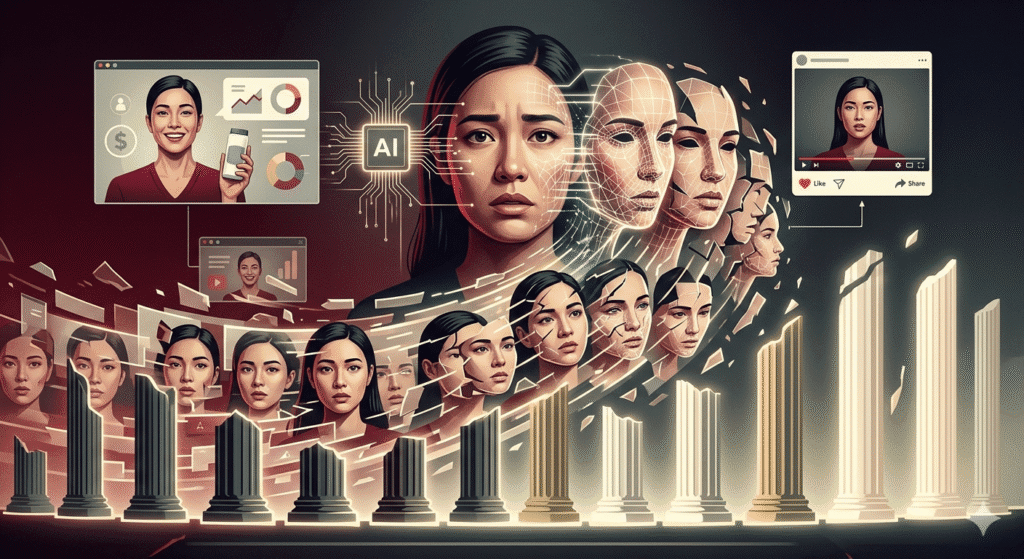
Three months ago, Ajay Devgn’s legal team rushed to the Delhi High Court with an unusual request. Videos of the actor were circulating online, featuring deepfaked versions that showed him endorsing products he’d never actually agreed to promote. Within days, the court issued an emergency order to remove the content. But here’s the frustrating part: there’s no specific law in India that actually says you own your own face. Yet the court protected it anyway. This contradiction sits at the heart of a problem that’s spiralling faster than technology companies can respond to. As artificial intelligence becomes sophisticated enough to convincingly replicate anyone’s likeness, Indian courts are scrambling to apply traditional legal tools to new and emerging problems. The real question isn’t whether something should be protected; it’s which law to use when you get there and whether that patchwork approach can actually hold.
THE LEGAL PATCHWORK INDIA HAS BUILT
Currently, India lacks a dedicated ‘personality rights law’ similar to those in some countries. Instead, Indian courts have borrowed concepts from various areas of law and pieced them together into something workable, albeit imperfect.
When Aishwarya Rai Bachchan filed her case against deepfakes and unauthorised merchandise in September 2025, her lawyers relied on several different legal hooks. They invoked the right to privacy under Article 21 of the Constitution, the same article courts once used to establish that privacy is fundamental to human dignity. They invoked the Copyright Act to argue that a person’s image is protected by a performer’s moral right. They used the Trademarks Act to protect her name from commercial misuse. And when all else seemed insufficient, they resorted to the common law tort of ‘passing off’, which essentially penalises businesses that deceive customers into believing a celebrity has endorsed them.
The judges agreed with all of it. However, that’s not a truly sustainable solution. The trouble is that these laws were written for different purposes. Copyright exists to protect creative works from unauthorised copying. The Trademarks Act keeps consumers from being confused about who makes what. Passing off prevents fraud. None of them specifically address what happens when someone takes your face, without your permission, without any creative work of your own, without any false trade, and uses it to do something damaging to your reputation or wallet.
THE SPEED PROBLEM AND PLATFORM ENFORCEMENT GAPS
Here’s where it gets genuinely complicated. Bollywood has been particularly targeted this year. Ajay Devgn’s case moved quickly; the court issued orders within days. But that’s almost the exception rather than the rule. Most deepfake victims don’t have access to celebrity lawyers and emergency hearings. For ordinary people, the timeline is messier: you discover the content exists, you report it to the platform (assuming you figure out which platform hosts it), the platform investigates, possibly takes it down, but identical versions pop up elsewhere.
YouTube, Instagram, and other sites process millions of uploads daily. Even with the best intentions, they can’t realistically police every single deepfake. After a court order comes through, enforcement becomes an endless game of whack-a-mole. Remove one video, and three others appear on different channels, different platforms, or mirrored to fresh servers in different countries entirely. The problem isn’t just legal, it’s practical. The infrastructure to enforce these rulings simply doesn’t exist at the scale needed.
Where the Law Actually Breaks Down
The deeper problem is this: our legal system still assumes that content lives in one place and an enforcement order kills it. When the Delhi High Court issues an injunction against a deepfake video, that order might be binding on Indian platforms and Indian nationals. But the internet doesn’t respect borders. Someone in another country can re-upload the same content, and technically, they’re not violating an Indian court order.
There’s also the question of intent and harm. Current Indian law generally requires proof of damage, either to reputation, to privacy, or to commercial interests. But what if someone creates a deepfake just to be funny or to make a political statement? Where does satire end and infringement begin? American courts have spent decades wrestling with this. Indian courts are just starting to grapple with these boundaries, and the answers remain unclear.
WHAT NEEDS TO CHANGE
The fact that courts are moving quickly is genuinely encouraging. The Madras High Court and Delhi High Court have shown they understand the urgency. But speed built on legal patchwork isn’t a long-term solution. India probably needs a dedicated statute, something that clearly defines personality rights, outlines who can use whose likeness and under what circumstances, and establishes real penalties for deepfakes created with malicious intent.
Some countries are already moving here. The EU has frameworks specifically addressing synthetic media. California has passed laws targeting non-consensual intimate imagery. India is playing catch-up, and while the judiciary is being creative, creative legal interpretation works until it doesn’t. Parliamentary intervention with proper legislation would provide the clarity and consistency that the current fragmented approach lacks.
CONCLUSION
For celebrities, the current situation is imperfect but workable. Courts are sympathetic, injunctions are coming relatively quickly, and the law, however messily assembled, seems to be holding. For ordinary people, it’s murkier. A deepfake of someone without resources rarely makes it to court. What’s clear is that 2025 has been a turning point. The judiciary has signalled that personality rights matter, that technology companies can’t just host whatever gets uploaded, and that old laws can be stretched to cover new harms. Whether that’s enough depends on what happens next, whether Parliament responds with dedicated legislation or whether judges continue improvising with borrowed tools. For now, at least, your face isn’t quite public property. The courts just haven’t written down exactly why, and that uncertainty is precisely the problem.
REFERENCES-
Statutes-
- Constitution of India, 1950
- The Copyright Act, 1957
- The Trademarks Act, 1999
Case Laws-
- R. Rajagopal v. State of Tamil Nadu, (1994) 6 SCC 632
- Anil Kapoor v. Simply Life India and Ors., CS(COMM) 652/2023
- Aishwarya Rai Bachchan v. Aishwaryaworld.com & Ors.
- Suniel Shetty v. John Doe S. Ashok Kumar, 2025 SCC OnLine Bom 3918
Online Sources-
- IndiaLaw.in, “Deepfakes, AI & Law: Protecting Celebrity Rights India” (2025)
- SCC Online, “India’s Evolving Personality Rights Law” (December 2025)
- IP and Legal Filings, “Personality Rights in the Era of Deepfakes & Synthetic Media”