Introduction
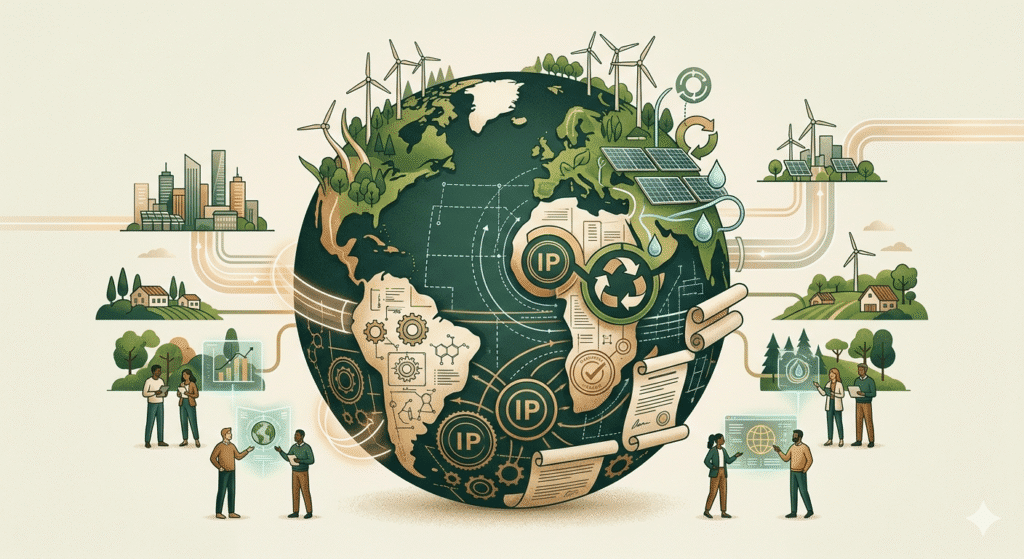
Climate change is no longer only an environmental problem; it is an innovation problem and a governance problem. Green intellectual property (IP) sits at the point where all three meet. Rather than treating IP law as some sort of dry technical field, Green IP asks a sharper question: how can patents, trademarks, designs and other rights be used as levers to clean up the planet, rather than just lock up markets?
Green IP frameworks consist of a set of principles, policies and practices that attempt to answer this question. They do not replace existing IP laws; they re‑interpret and re‑design those laws in such a way that low‑carbon, resource‑efficient and socially fair technologies are more easily created, protected and shared.
Monopoly on mission
Traditional thinking in IP tends to begin with the inventor’s reward: grant exclusivity, ban copying and assume that innovation will result. Green IP reverses the beginning. First comes the mission: to cut emissions, reduce waste, protect biodiversity and assist vulnerable communities in adapting. Then comes the IP strategy.
This change of mindset leads to different choices. A company working on green technology might still file patents. But it might also:
- Use open licenses for technologies in public infrastructure, such as smart grids.
- Offer cheaper licenses to poorer countries or climate‑vulnerable regions.
- Share non-core know-how through partnerships to accelerate deployment.
The core is that the success metric isn’t simply “how strong is the monopoly?” but rather “how much climate impact does this right help unlock?
What makes IP ‘Green’?
In most laws, there is no magic new category called a “green patent”. Rather, IP becomes “green” because of what it protects and how it is used.
A few simple examples illustrate this, for example, a patent for improved solar cells, enabling renewable energy to become more affordable or a design right over packaging that is easier to re-use, refill or recycle.
Green IP, in this sense, is functional and dynamic. It can cover frontier technologies like carbon capture but also low‑tech innovations like better cookstoves or local water‑harvesting models. What matters is whether the protected subject actually reduces harm or supports just transitions.
“Plumbing”
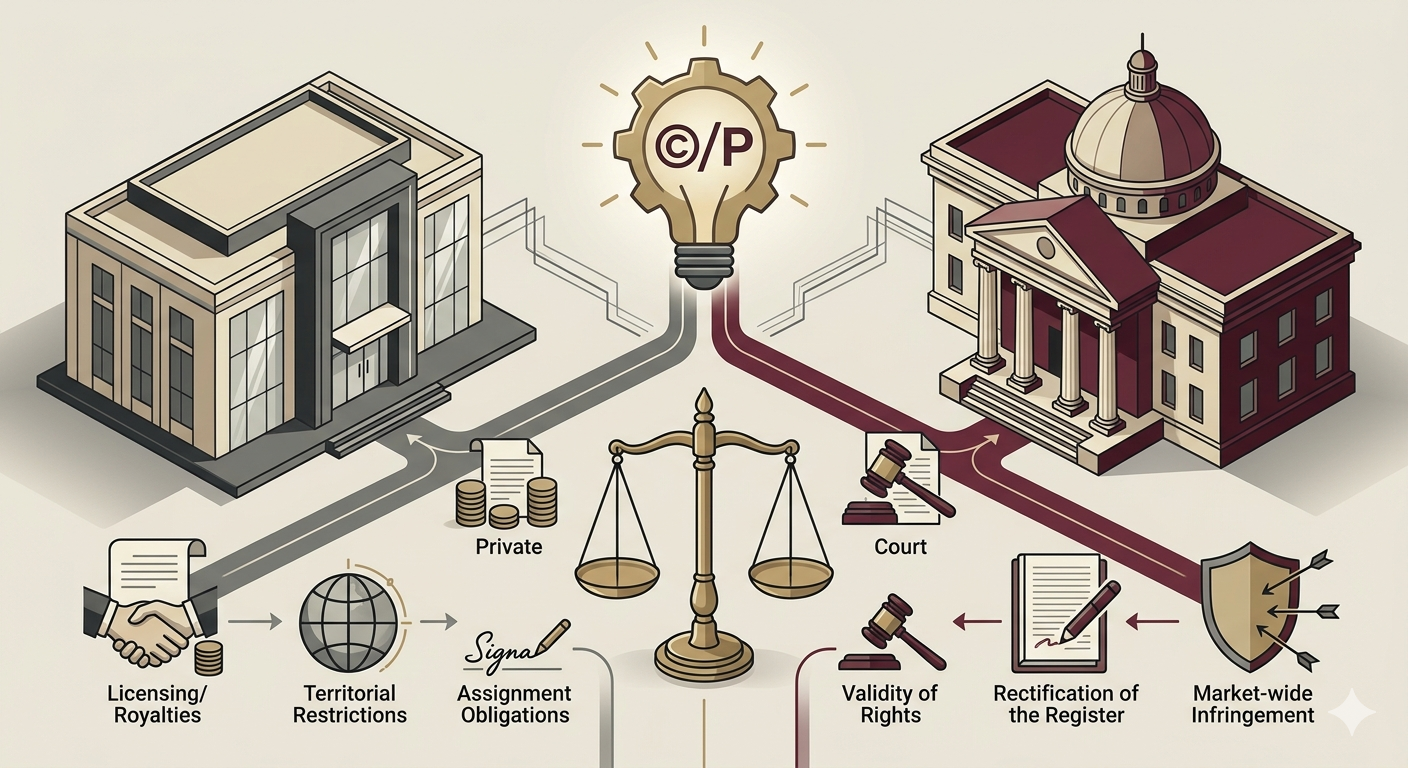
The most useful way to think about Green IP frameworks is to consider them as legal plumbing in the climate system: the pipes are there, patent offices, courts, licensing contracts, competition rules, and investment treaties. Green IP does not destroy the plumbing but rewires it for its new purpose.
- Fast-track examination of patent applications claiming green technologies to get such inventions to the market quicker and attract funding earlier.
- Public platforms in which technology providers and seekers are connected, thereby making the matching of climate needs with available solutions easier.
- Guidelines or policies that push public research institutions to license climate-relevant innovations in more open or socially responsible ways.
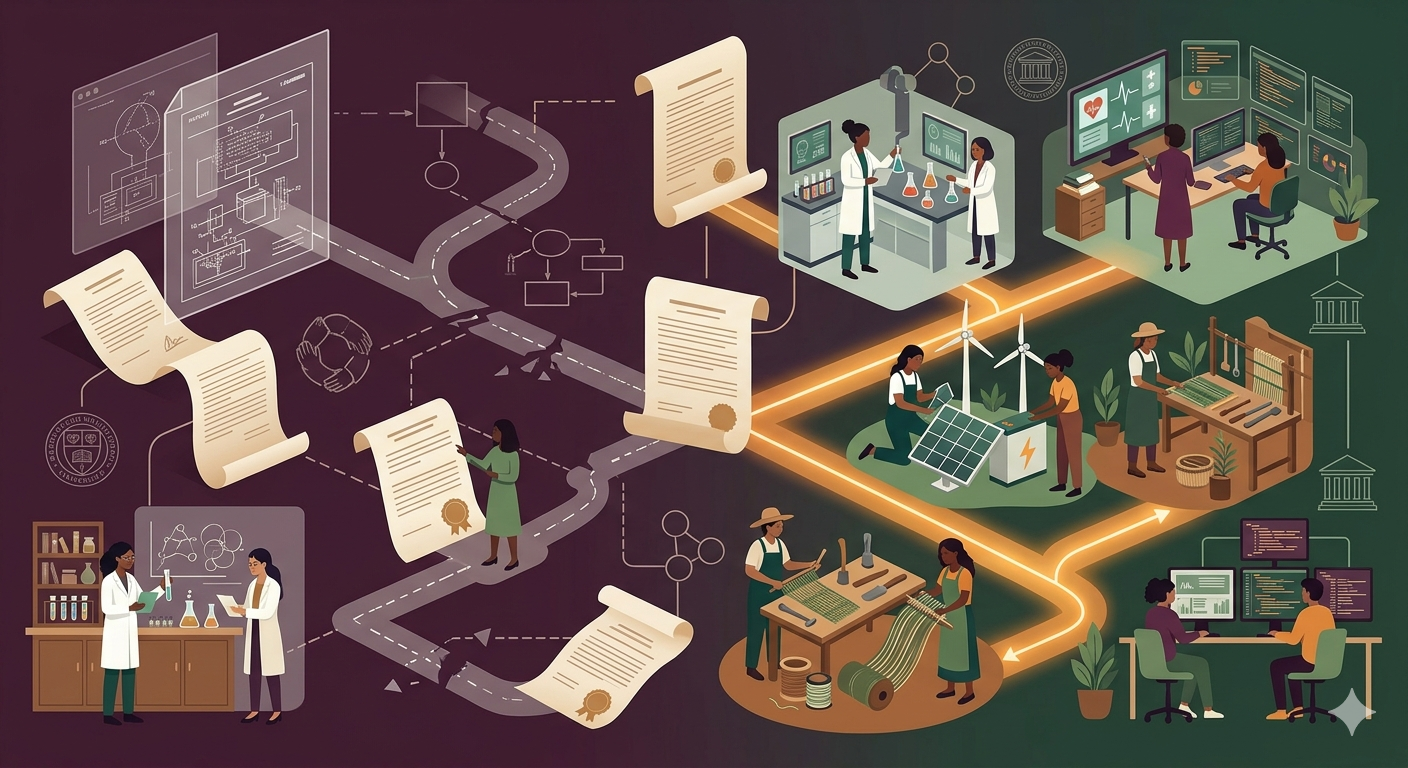
These are not a set of glamorous measures, but rather a few backstage adjustments. They decide whether a promising clean technology stays stuck in a lab file or actually reaches farmers, households and cities.
Tension: Incentives versus Access
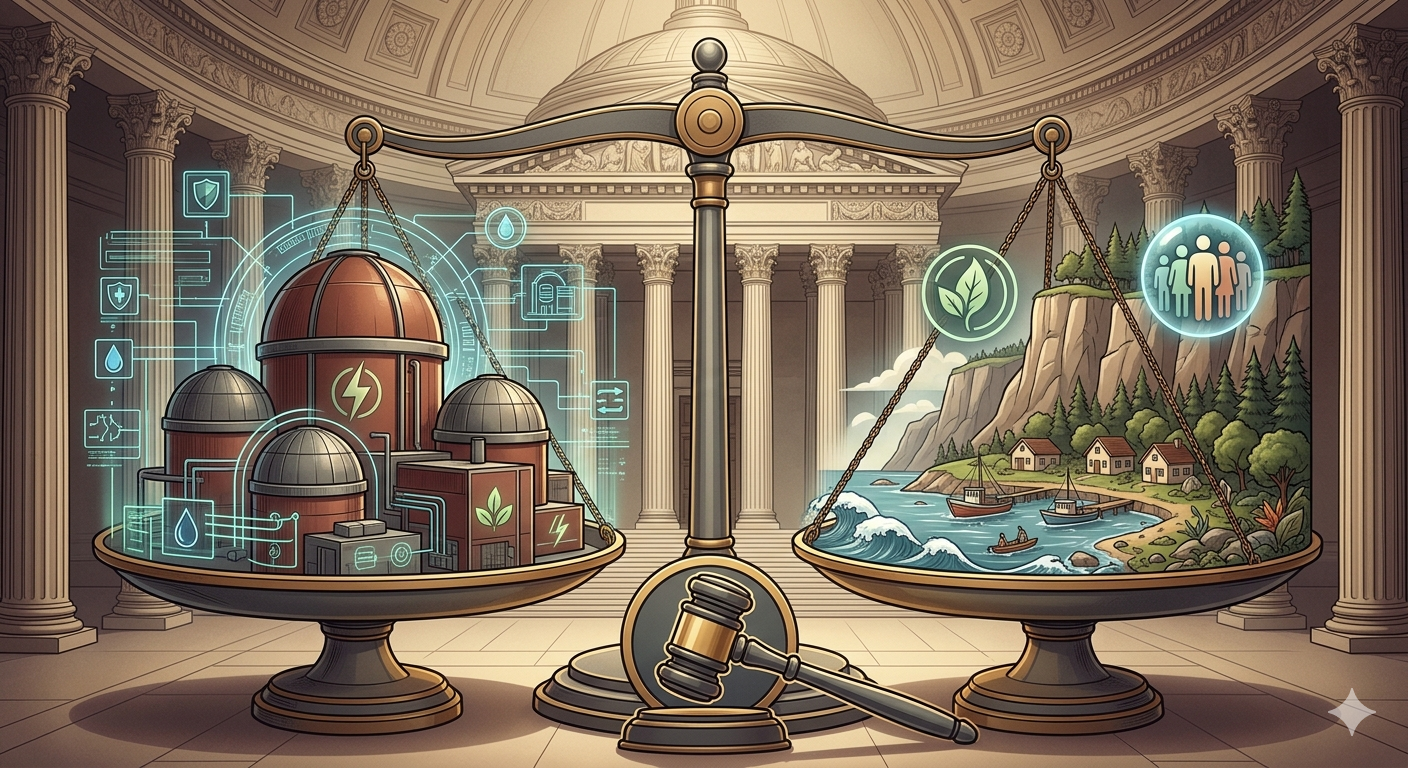
Green IP lives inside a permanent tension between the need to reward risky investment and the urgency of making lifesaving technologies widely available. That tension is not a bug; it’s the central design problem.
On one side, if exclusive rights are too weak or too uncertain, private actors may underinvest in new solutions. Climate technologies often require high upfront costs and long development cycles, so investors want some legal protection.
On the other hand, if rights are too strong, too broad, or too aggressively enforced, they can delay entry of cheaper competitors, make follow‑on research harder or even raise prices in markets that are already vulnerable.
Green IP frameworks attempt to deal with this tension through the use of calibrated tools: time‑limited exclusivity, differential pricing, patent pools, voluntary licensing clubs and, from time to time, the credible threat of compulsory licensing where the public interest is overwhelming. The singular feature of the green context, however, is that delay is not neutral; each year lost has a measurable climate cost.
Role of Non-Patent IP in Green Transitions
Patents get most of the attention in Green IP debates, but non-patent rights also matter deeply.
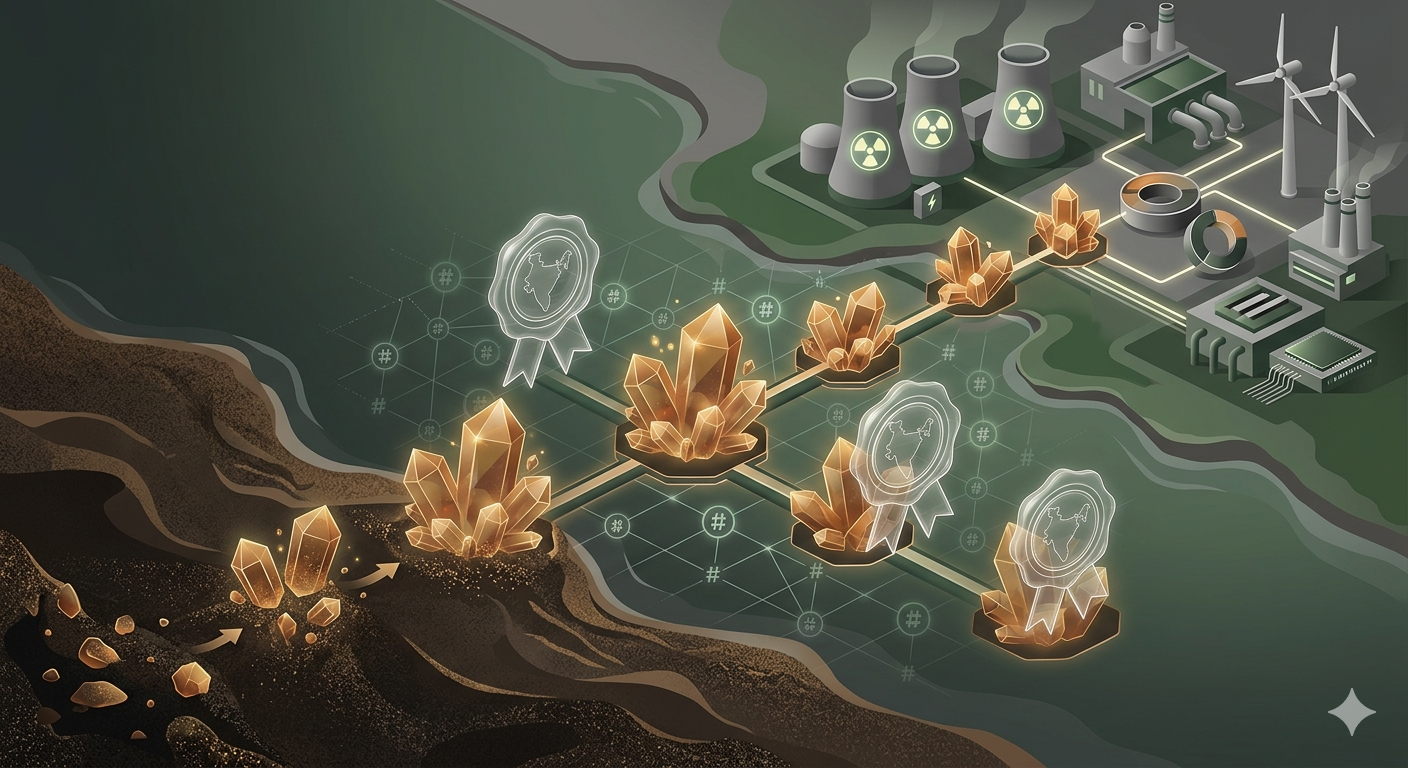
Trademarks and certification marks are at the heart of trust. If the eco‑labels themselves are weak or misleading, then consumers cannot reward truly sustainable products. Strong, honest marks, backed by regulatory oversight, can create a market premium for doing the right thing.
Designs influence repairability and circularity. A product designed to be glued shut and impossible to disassemble is bad for the environment, even if it is “cool.” Protecting designs that build in repair, modularity and reuse can push firms toward circular business models.
Sometimes, trade secrets protect process know-how for green technologies. The challenge is to ensure that secrecy does not block diffusion entirely. Smart frameworks could include encouragement of partial disclosure or staged sharing when specific commercial thresholds are attained. Looking beyond patents widens the imagination. Every IP right can either nudge markets toward sustainable behaviour or allow business‑as‑usual to continue under a new shade of “eco” branding.
Justice, not just Growth
One important, yet often underdiscussed, dimension of Green IP frameworks is justice. Climate change hits countries and communities that contributed least to the problem. So far, as IP rules simply allow rich countries and big firms to lock up key technologies, the climate regime becomes unjust by design.
Green IP thinking, therefore, raises questions like:
- Should least developed and small island states receive special access or pricing for critical mitigation and adaptation technologies?
- How do frameworks respect and reward indigenous and local knowledge, which has maintained ecosystems for generations?
- Are there ways to design licensing and funding structures so that green innovative ecosystems grow in the Global South and not only in existing tech hubs?
The questions push Green IP beyond narrow legal doctrine into the realm of ethics, development policy and human rights. That is where some of the most interesting and difficult work now lies.
Why do IP frameworks matter now?
The climate crisis is closing the window for slow, incremental legal reform. Green IP frameworks are a pragmatic middle path: use what already exists in IP law but bend it decisively towards climate goals. Instead of treating IP as an obstacle or a silver bullet, they treat it as a toolkit that must be carefully tuned.
This area provides an unusual platform for students, lawyers, policy thinkers and innovators to take a highly specialised field and connect it directly with issues of survival, equity and prosperity that are long-term in their scope. The unique promise of Green IP is simple but powerful: if innovation rules are rewritten with climate in mind, the law itself can become part of the solution rather than a silent bystander.
Conclusion
Green IP frameworks demonstrate that intellectual property can function as climate infrastructure rather than merely market protection. By aligning innovation incentives with sustainability goals, Green IP frameworks enable technologies, knowledge, and branding tools to accelerate climate solutions. The future of Green IP frameworks lies in balancing exclusivity with accessibility to deliver measurable environmental impact.
References
- https://suranaandsurana.com/green-innovation-and-intellectual-property-rights/
- https://www.boult.com/bulletin/fast-track-patent-programmes-for-green-technology/
- https://sdgs.un.org/partnerships/leveraging-wipo-green-technology-platform-water-action
- https://www.ige.ch/en/law-and-policy/international-ip-law/ip-organisations/wipo/biodiversity-and-sustainable-development/wipo-green
- https://sdgs.un.org/partnerships/wipo-green
- https://www.uspto.gov/about-us/news-updates/uspto-becomes-partner-international-green-technology-platform-wipo-green-0
- https://global.canon/en/intellectual-property/partnership/advance/wipo-green.html
- https://www.wipo.int/edocs/pubdocs/en/wipo_pub_greenstrpl1923.pdf
- https://www.wipo.int/documents/d/climate-change/docs-en-pdf-ip_climate.pdf