
Introduction
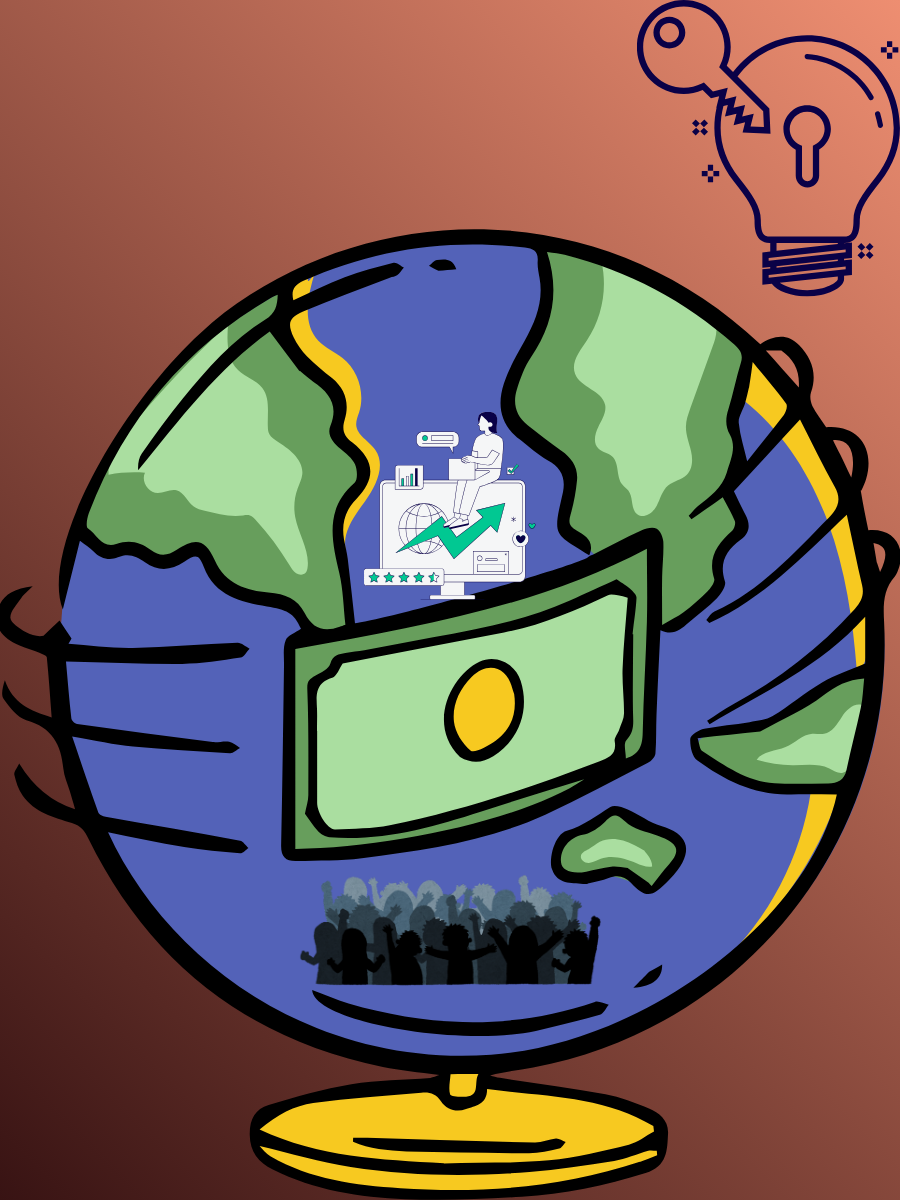
We need to talk about the awkward moment when a brand stops being just a logo on a shoe and starts being a word in our daily language. It is a strange phenomenon of modern capitalism that we don’t just consume products anymore, we consume the culture of those products. We ‘Google’ information, we ‘Xerox’ papers, and we complain about the ‘Coca-Cola-isation’ of society. But here is the problem, once a brand becomes part of the public conversation, does the company still own it? If I use a trademark not to sell a rival product, but to make a joke, a political statement, or a movie scene, am I stealing their property or exercising my constitutional right?
This isn’t just a theoretical debate but a live conflict in Indian courtrooms between two massive legal forces. On one side, you have the Trade Marks Act, 1999, which is designed to fiercely protect the reputation and financial value of a brand. On the other, you have Article 19(1)(a) of the Constitution, which guarantees your freedom of speech and expression. The friction between these two is intense because, unlike copyright law, trademark law in India doesn’t really have a sense of humour. It wasn’t built for satire but to stop people from selling fake shoes. But as we will see, when you try to use a law designed for counterfeiters to silence critics and artists, you end up with some very messy, very human legal battles.
The Statutory Silence
To understand why this is such a headache, you have to look at the gaping hole in the statute books. If you decide to write a scathing review of a book or a parody of a famous song, the Copyright Act, 1957 has your back. Section 52 of that Act specifically allows for ‘fair dealing’ for the purposes of criticism and review. It is a safe harbour and you can stand there and say, “I’m not stealing your work but engaging with it.”
But the Trade Marks Act, 1999 is silent. It has no specific exception for parody, satire, or criticism. Instead, it gives brand owners a terrifyingly powerful weapon under Section 29(4) called ‘dilution.’ This section basically says that even if you aren’t selling a competing product, say, you are an environmental activist or a filmmaker, you can still be liable for infringement if you use a well-known mark in a way that takes unfair advantage of its reputation or is detrimental to it.
Think about that for a second. Detrimental to repute is exactly what a good critic tries to do. If I write a blog post saying a company is destroying the planet, I am definitely trying to be detrimental to their repute. Under a strict reading of Section 29(4), that could be trademark infringement. The only thing standing between a critic and a lawsuit is a tiny, undefined phrase in that section i.e., without due cause. If you can prove you had due cause to use the mark, you might survive. But because the Parliament never defined what due cause actually means, it has been left entirely to the judges to figure out if your free speech counts as a good enough excuse to mess with a billion-dollar brand.
When Turtles Fought a Giant: Tata Sons v. Greenpeace
The most fascinating battleground for this issue was the clash between one of India’s most respected conglomerates and a global environmental NGO. Tata Sons Ltd. v. Greenpeace International is essentially the Magna Carta for trademark free speech in India.
Greenpeace wanted to protest the construction of the Dhamra Port in Odisha, a project involving Tata Steel, which they believed would destroy the nesting grounds of the endangered Olive Ridley turtles. To get the public’s attention, they didn’t just write a dry report, they built a Pac-Man style video game called “Turtle vs. Tata.” In the game, the player controlled a small yellow turtle trying to eat dots while dodging Tata demons (scary characters branded with the Tata logo).
Tata Sons was not amused. They sued for trademark infringement and defamation, arguing that labelling the Tata brand, a name associated with nation-building and ethics as a demon was malicious, defamatory, and tarnished their intellectual property. They demanded a permanent injunction to take the game down.
Delhi High Court delivered a judgment that cut right through the corporate outrage. HC refused to grant the injunction, and his reasoning fundamentally shifted how we look at trademarks in public discourse. HC leaned heavily on the Bonnard Rule, an old English common law principle from 1891, which essentially says that courts should almost never stop a publication before a trial (prior restraint) unless the statement is clearly, obviously false. If a defendant says, “I can prove this is true” or “This is fair comment,” the court must back off and let the trial happen later. You cannot gag a critic just because they might be wrong.
But the court went further. HC addressed the trademark issue by introducing the concept of ‘denominative use.’ HC realized that you simply cannot criticize a company without using its name. If Greenpeace wants to protest Tata’s actions, they have to say ‘Tata.’ Using the trademark was necessary to identify the target of the critique. More importantly, the court looked at the Tata demons and called it hyperbole. The judge noted that the use of the word demon was clearly a rhetorical device to express an environmental viewpoint, not a factual claim that Ratan Tata is a supernatural entity. The court held that this parodic use constituted due cause under Section 29(4). This was a massive win for free speech because it established that a trademark isn’t just property but a valid target for political expression.
The Limits of a Joke: Hamdard v. Hussain Dalal
If Tata v. Greenpeace gave you the impression that you can say whatever you want about a brand, the case of Hamdard National Foundation v. Hussain Dalal serves as a sobering reality check. It shows that courts are much less forgiving when the speech is purely commercial and lacks a noble cause like saving turtles.
The dispute arose over the Bollywood blockbuster “Yeh Jawaani Hai Deewani.” In one scene, a character played by Ranbir Kapoor mocks the drink Rooh Afza. When his mother tries to console him about his life, he snaps back, saying “Yeh Roohafza Bahut Bekaar Hai!” (This Rooh Afza is useless!). Later, he adds that even if the world changes, Rooh Afza will remain bad.
The owners of Rooh Afza argued that this wasn’t just a casual opinion but a spoken use infringement under Section 29(9) of the Trade Marks Act. They claimed the dialogue tarnished a brand that has been part of Indian households since 1907, solely for the sake of a cheap laugh in a for-profit movie.
The Delhi High Court agreed with Hamdard and issued an injunction. Why the difference? Why could Greenpeace call Tata a demon but a Bollywood character couldn’t call Rooh Afza bad? The answer lies in the value of the speech. The court found the dialogue to be in poor taste and noted that it did nothing for the public interest. In the Tata case, the trademark use was part of a political debate on environmental policy. In the Hamdard case, it was just a commercial film making money by dragging down another commercial entity. Without the shield of political protest or social commentary, the due cause defence falls apart. The court essentially said that while you have a right to free speech, you don’t have a right to trash a brand in a commercial movie just for giggles.
The Capitalist Symbol Defence: Bata v. Prakash Jha
Somewhere between the high-minded activism of Greenpeace and the low-hanging fruit of “Yeh Jawaani Hai Deewani” lies the fascinating case of the film “Chakravyuh,” involving the shoe giant Bata. This case shows us the messy middle ground where courts try to keep everyone pleased with a compromise.
The film, directed by Prakash Jha, dealt with the Naxalite movement and social inequality. It featured a song called ‘Mehangai’ (Inflation) with the provocative lyrics: “Tata, Birla, Bata… sabne desh ko kaata” (Tata, Birla, Bata… everyone has fleeced the nation). Bata sued, arguing that this song equated their respectable brand with corruption, dacoity, and bleeding the nation dry.
Bata’s argument was strong on paper as the lyrics literally accused them of cutting the nation. However, the Division Bench of the Delhi High Court took a broader view of the artistic context. They accepted Prakash Jha’s argument that the names “Tata, Birla, Bata” weren’t being used to refer to the specific companies, but were being used as metonyms, symbols standing in for industrial power or the establishment.
The court called this rhetorical hyperbole. They reasoned that the average viewer watching a film about Naxalites would understand that the song was an expression of the have-nots fighting against the haves, not a literal factual allegation that the Bata Shoe Company is a criminal enterprise.
However, later the Supreme Court, perhaps sensing that this opened the door a bit too wide, added a safety lock. While they allowed the song to stay, they ordered the filmmakers to add a disclaimer: “Use of the names in the song are merely as example. No injury or disrespect is intended to any particular person or brand.” This is the Indian compromise. The artist gets to keep their expression, but the brand gets a judicial pat on the back acknowledging that they aren’t actually villains. It is a slightly clumsy but a pragmatic solution.
Why “Due Cause” is Your Only Shield
What these cases reveal is that the conflict between trademarks and free speech in India is handled on a case-by-case basis, which makes things incredibly unpredictable for writers and creators. We don’t have a statutory right to parody. We have to hope that a judge thinks our joke constitutes due cause.
The commercial speech doctrine plays a huge role here. Indian courts have consistently held that while commercial speech (like advertisements or movies) is protected under Article 19(1)(a), it enjoys a lower level of protection than political or artistic speech. If you are an influencer reviewing a product, or a filmmaker using a brand as a prop, you are operating in a zone where the court is more likely to protect the property right of the trademark owner over your right to speak.
In contrast, if your speech is political (activist), like Greenpeace, the courts are willing to read down the Trade Marks Act to ensure that powerful corporations cannot use their intellectual property to silence dissent. This creates a hierarchy of speech where the intent of the user matters more than the content of the message. You can call a brand a demon if you are saving the planet, but you cannot call it useless if you are just making a rom-com.
Conclusion
So, where does this leave us? The intersection of trademark law and the Constitution is still a construction site in India. The Due Cause provision in Section 29(4) is currently the only thing preventing trademark law from becoming a censorship tool.
It is arguably time for the Parliament to step in and amend the Trade Marks Act to include a specific defense for parody and criticism, similar to the Copyright Act. Until then, we are relying on the wisdom of judges to recognize that a trademark is more than just an asset on a balance sheet. Once a brand becomes famous enough to be a household name, it enters the public domain of ideas. It becomes part of the language we use to make sense of our world. And in a democracy, no corporation should have a monopoly on the language. If a brand wants the benefits of being a cultural icon, it has to accept the burden of being the butt of the joke.